
Recommended tools and plans
Choose a deployment model first. A small hosted business app and an exported application maintained by a developer are different purchases.
For a small internal app with limited data
Fuzen
Tier 1 at $79 is the starting option for up to 2 apps when the included platform capacity and AI allowance are enough. It avoids making source-code deployment your first task.
Keep in mind: Capacity is shared across the account. Tier 1 BYOK wording conflicts across the offer; do not base a purchase on unrestricted use of your own model key.
Buy nowExplore Fuzen’s features and plansFor several business apps and documented BYOK access
Fuzen
Tier 2 at $159 raises the app allowance to 5 and is the conservative starting point when using your own AI key is a requirement.
Keep in mind: Your AI provider bills you separately. More apps do not remove shared storage, record, request or server limits, and a template licence is not automatically a right to resell the template.
Buy nowExplore Fuzen’s features and plansDo you need an app, a website or a form?
An app earns its complexity when different people must log in, see different records and change a workflow over time. A service page with a contact form may not need an app builder. Keeping that job in your existing website can avoid another database, account system and maintenance process.
Write one complete transaction before shopping: a customer submits a request, a staff member updates its status, and the customer sees only their own record. List the data, access rules and messages this requires. Compare products against that transaction rather than the number of screens a demo can generate.
Hosted business apps or code you can deploy elsewhere?
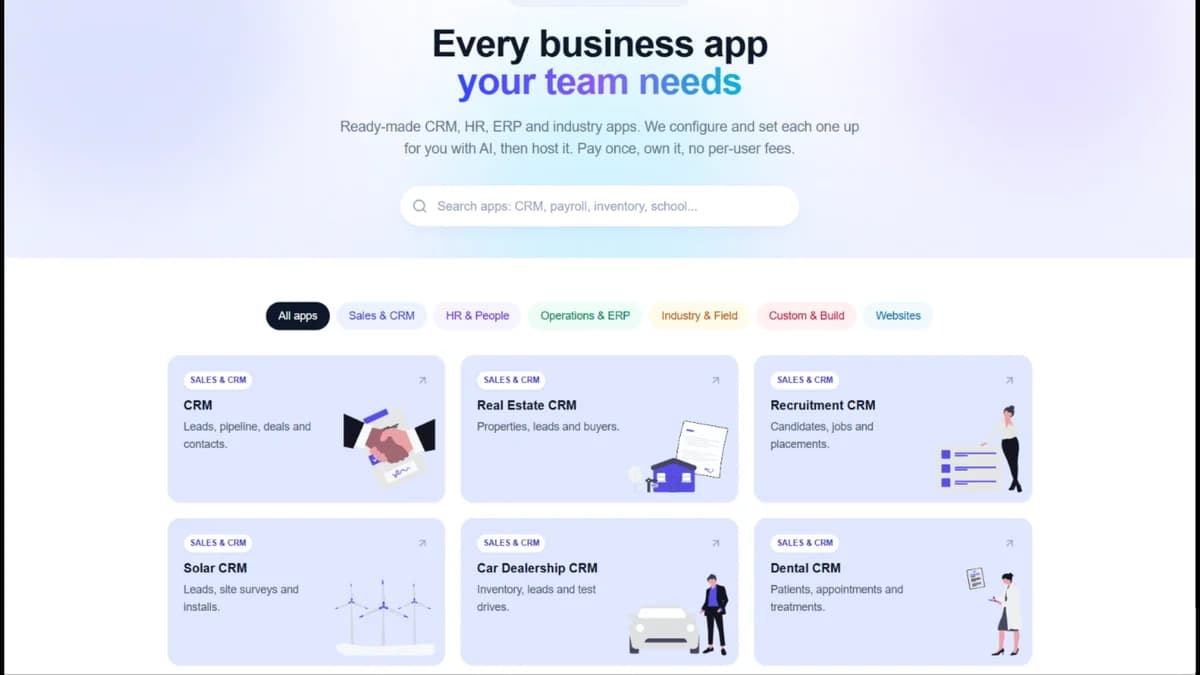
Fuzen combines a hosted application with its platform services. That can suit a small operational tool when you want to build around data and workflows without arranging each infrastructure component. The tradeoff is dependence on the platform: exporting records as CSV is not the same as exporting an application that runs elsewhere.
Friday Code uses a desktop development workflow and supports code export. That approach is relevant when you need to inspect or continue developing the application outside the builder. Exported code still needs deployment, security updates, backups and someone who can diagnose failures. Its AppSumo offer is currently sold out, so the recorded plans are historical, not a purchase recommendation.
If a client must own a portable application, make that a requirement before buying. A logo change, custom domain or data download does not establish source-code portability.
Budget the running app separately from building it
Keep two budgets: the AI work used to create and revise the app, and the resources used when customers run it. A request quota can matter even when no one is asking the builder to write new code. Uploaded files, database records, outgoing messages and AI features inside the finished app may use different services.
Fuzen lists additional storage and database-row capacity as recurring purchases, while request and server-credit packs are separate usage purchases. The product article explains the published amounts and remaining lifetime-plan uncertainties. Do not convert an unlimited-users claim into unlimited infrastructure.
For an exported app, add the hosting account, domain, database, email delivery and model API charges that your chosen architecture actually needs. A familiar free plan may be enough for a prototype; check its permitted use and limits before treating it as the production budget.
Estimate a busy day, not only an average month
Fuzen has both daily and monthly AI limits. A month with room remaining can still have a day when you cannot complete all the changes you planned. Leave room for revisions and error correction instead of budgeting one successful generation for every task.
For example, a team that plans all its app changes on one Friday needs to assess the daily ceiling. Spreading the same work over several days may fit a lower tier, but that schedule must be practical for the people waiting on changes. Your account-level capacity also covers the apps you keep running; a second app is not automatically a second full allowance.
Agree on the handover before building for a client
Separate permission to build an app for a client from permission to resell a supplied template or transfer your lifetime account. The Fuzen founder has permitted client app resale, but older template restrictions still make the exact delivery model important. Get template-specific rights clarified before selling a packaged template; a higher tier alone does not settle that question.
A sensible handover identifies who owns the domain, pays each external bill, controls backups and can recover the project. Use a small non-sensitive sample workflow to evaluate access boundaries and export options before committing a real customer database.
Feature comparison
Use the same checklist for each tool. Plan limits, paid extras and features that need confirmation are shown separately.
Features are grouped by documented coverage. “Not confirmed” means the evidence is incomplete, not that a feature is absent.
Check each product’s plan notes for tier limits and additional costs. Feature coverage is not a quality rating.
Buying questions
Which app builder deal should I start with for one internal tool?
Fuzen Tier 1 is the starting comparison when 2 apps and its included capacity are enough. Choose by the records, file storage and usage you need; unlimited users alone does not establish a fit.
Does a lifetime app builder include lifetime hosting for any scale?
No such assumption is justified. Hosted services have their own capacity rules, and exported apps need somewhere to run. Include paid capacity and external services in the cost calculation.
Can I export a Fuzen app and run it on my own server?
The product terms supports data export, not a portable source-code export. Do not confuse downloading records with moving the functioning application.
Can I still buy the Friday Code lifetime deal?
The current AppSumo listing is sold out. Its page here preserves the recorded offer and explains its limitations; it is not listed as a live recommendation.
Will using my own AI API key remove every limit?
No. It changes who pays for model usage; it does not necessarily remove platform app, storage, record, request or server limits. For Fuzen, Tier 1 BYOK entitlement is also conflicting, so the recommendation starts at Tier 2 when it is required.