
AI copywriting
How to budget AI content credits before buying a lifetime deal
Build a production budget for scripts, books and campaign copy. Separate renewals, one-time credits, revisions and outside costs.
In this article
Choose what you need to produce
An AI content credit budget should describe finished work, not just a balance on a pricing page. A script, a chapter and a marketing campaign can consume entirely different units. This guide is for a creator deciding which writing workflow deserves a software purchase and how much room to leave for changes.
Start with one normal month. Write down the deliverable, number of drafts, review owner, export format and delivery tool. For example, a creator might need four YouTube scripts, one downloadable workbook and an email campaign. Those are three jobs. Buying the tool with the largest displayed credit number does not establish that it can finish all three.
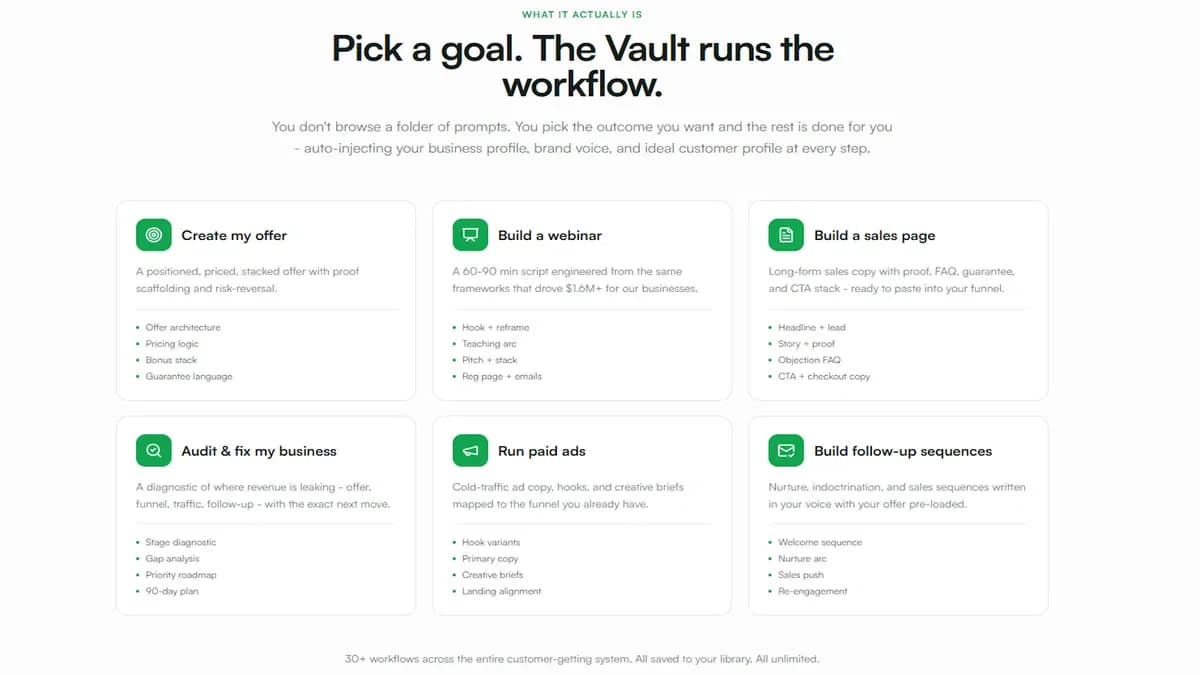
Subscribr organizes YouTube research and scripts. AIWriteBook organizes book authoring. The Marketing Vault builds campaign assets around saved business context. Choose the missing workflow first; these products are not interchangeable alternatives.
Make a separate budget for each allowance
Use a small worksheet before choosing a tier. Keep recurring balances, one-time grants and purchased packs on separate rows. The worksheet below is a planning example.
Do not put every type of credit into one total. A larger script balance cannot cover a separate video bill. Likewise, an unlimited in-app generation label does not establish unlimited automation, storage or client capacity.
Budget recurring scripts and one-time video credits separately
Consider a hypothetical channel producing three ten-minute scripts in a month. Using Subscribr’s documented example of five credits for that length, the initial generations require 15 script credits. Tier 2 currently includes 20 monthly script credits at $129 once. That is a candidate for the script workload if its channel and seat limits fit. It is not a promise about the quality or length of the final edited videos.
Put thumbnail experiments and video creation on their own rows. Included video credits on higher tiers are a one-time grant. Dividing that grant into a monthly production forecast would make the second month look cheaper than it is. Script batches also have an expiry window; they are not a permanent bank of every missed allocation.
If you already outline and edit effectively in your own document editor, compare the benefit of organized research and channel context with the cost of adding another system. The YouTube scripting hub helps narrow that decision. Tier 1 has no recurring script-generation allowance, so it should not be selected just because it is the least expensive tier.
Separate a regular book project from an Expert Book purchase
For a book, list the actual stages you will use: outline, chapters, factual review, illustrations, editing, formatting and export. AIWriteBook charges several of those as separate actions in its regular workflow. An appealing chapter-generation estimate can omit the Format step or the work needed to correct the manuscript.
A useful approach is to budget one sample chapter first, then list which charges repeat across the whole book and which happen once. Do not simply multiply the sample chapter’s cost by the chapter count if the cover, formatting or book-level editing has a different charging rule. Keep a manual editing path available when the planned budget is exhausted.
Expert Book uses a separate unlock model. The published product information identifies a temporary beta rate and a conflicting future-policy risk; it does not establish a permanent monthly-book entitlement for a particular tier. Use the AIWriteBook tier explanation before budgeting that mode. Monthly balances do not accumulate, so waiting another month does not necessarily solve a large unlock requirement. The book-writing hub also separates authoring assistance from publishing and editorial work.
Budget client profiles and automation alongside campaign copy
For campaign writing, count the businesses whose context must remain available at the same time. Imagine an agency working with three active clients and retaining two completed client profiles while final edits are agreed. That is five contexts, not three new jobs. The Marketing Vault’s profile-retention rules mean a deleted profile can continue occupying a slot; a small plan cannot be treated as an unlimited rotation of short projects.
Next, decide how the copy will be generated. Current higher tiers offer in-app use under fair use, while external MCP and API activity has separate published limits. A person clicking through the app and an assistant running a scheduled workflow do not have identical allowances. Do not buy an API tier for a process that only needs a normal export and manual handoff.
A campaign still needs its sending platform, website or ad account. Keep those costs outside the generation budget. The AI copywriting hub is useful when deciding whether a reusable campaign workspace is necessary at all.
Check what runs out before upgrading
Choose a small representative deliverable and define what makes it acceptable: correct facts, usable structure, a supported export and manageable revisions. During a future trial, record the starting balance, each action and the ending balance.
Set a maximum revision budget before generating repeatedly. If a draft continues to miss the brief, improving the source material or editing manually may be more useful than buying a higher allowance. A larger plan solves a documented capacity limit; it does not prove better output.
Buy only when the workflow, capacity and export requirements all fit. Keep unpriced extras marked unknown, not zero. Check the current deal terms before buying, especially where beta features, add-ons or expiry rules determine the budget.